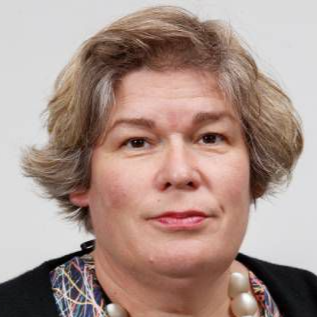
Peter Humphreys (left) with his daughter Sian, and Christine Fleming (right) with her son Justin Coote. Fleming says she is thrilled with the Supreme Court decision. Photo / Sylvie Whinray
Peter Humphreys (left) with his daughter Sian, and Christine Fleming (right) with her son Justin Coote. Fleming says she is thrilled with the Supreme Court decision. Photo / Sylvie Whinray
Two parents who care for their severely disabled adult children have been recognised as homeworkers and are entitled to receive the minimum wage after a landmark ruling today from the country’s highest court.
Now that they’ve been deemed to be employees of Disability Support Services (DSS), the families arehopeful the Supreme Court decision paves the way for other carers in a similar situation.
The case was brought by two parents, Christine Fleming and Peter Humphreys, who each care for their severely disabled adult children, Justin and Sian, whose physical and intellectual disabilities require constant supervision and around-the-clock care.
Today, Fleming said she was thrilled with the decision that was unanimously reached by five judges.
“We are really impressed with their grasp of the complicated, confusing and contradictory picture that is the disability support services system and their acknowledgement that our work is of a minimum period of 40 hours per week.”
She said they were grateful that the court had recognised the work that family carers do for high needs, disabled family members, adding it was never just about the two families who took the case.
“Our driving force has always been to get a fair and just result for all families caring for family members with high and complex needs.”
In a statement, Peter Humphreys echoed a similar sentiment, saying the case was never just about him or his whānau, but was taken on behalf of thousands of families who deliver complex care at home.
“Caring for my daughter is the most important role I will ever have, but it also replaces services the Government would otherwise need to provide. This judgment makes it clear that when the Government relies on family carers to carry out this work it must also respect our rights as workers, with fair pay, proper protections, and dignity.
“This decision has been a long time in the making. It has taken more than six years of going through the court system to reach this point – a process that was exhausting, stressful, and often disheartening. No family should have to endure such a lengthy legal battle just to have their work recognised and respected.
“For too long, many carers have felt invisible and undervalued. I hope that this decision gives them confidence to speak up, and that it drives real, lasting change in how disability support is funded and delivered across Aotearoa. No one should have to fight in court simply to be treated decently.”
Independent disability advocate Jane Carrigan, who filed the original case in the Employment Court, said she’s delighted with the decision that may impact thousands of carers.
Fleming and Humphreys argued they were “homeworkers” and as employees of the Ministry of Health were entitled to be covered by employment law because they were providing the disability support services the Government is responsible for.
Christine Fleming cares for her intellectually and physically disabled son Justin. Photo / Sylvie Whinray
In 2018, Fleming turned down the ministry’s offer of Funded Family Care (FFC), which allowed a disabled person to employ an eligible family member, arguing she was financially better off receiving a benefit.
Despite knowing Justin’s needs, the ministry refused to pay Fleming for 40 hours a week, initially offering payment for 15 hours a week, equivalent to just over two hours a day, and later increasing that to 22 hours a week. Both offers were non-negotiable.
Today’s decision comes seven years and seven months after Fleming’s case was filed in the Employment Court and more than two decades after family carers first went to court complaining they had the right to be paid for the care they provided when their disabled adult children lived at home with them.
The Employment Court found both parents were employees of the ministry as homeworkers, which is defined by law as “a person who is engaged [or] employed ... by any other person ... to do work for that other person” in the home.
It ruled Humphreys was classified as a homeworker during the six years he received FFC while providing full-time care for Sian.
But the court ruled he lost his homeworker status in 2020 when FFC was discontinued and he was funded through individualised funding, which didn’t require an employment relationship between him and his daughter.
Ministry’s offer was ‘unreasonable, if not unlawful’
In its decision, the court found Fleming was engaged as a homeworker because of a number of factors. These included the ministry’s awareness she was caring for Justin and that without this care the ministry would have to meet its obligations to him.
It found the definition of the term engagement as a homeworker was to be interpreted broadly, and the ministry’s offers to families were unreasonable in terms of the hours they were offering to pay them.
It also found that FFC did not exclude Fleming’s rights under the Employment Relations Act.
It concluded the ministry’s offer of FFC was “wrongly calculated and unreasonable, if not unlawful, due to the number of hours offered” knowing Justin required 24/7 care.
Peter Humphreys cares for his intellectually and physically disabled daughter Sian. Photo / Sylvie Whinray
The court also found Humphrey’s transition from FFC to individualised funding was a continuation of the status quo and therefore he never lost his status as a homeworker, adding that the ministry’s documentation supported this.
“There was accordingly no difference for Mr Humphreys and Sian between their positions under funded family care and individualised funding,” it said.
Finally, the court considered the meaning of work.
It said Fleming should be paid for the work she did, including for the time spent on supervision and sleepovers.
But, it referred the decision on the number of hours she was to be paid back to the Employment Court to determine the full range of employment entitlements she should receive.
In a statement, DSS deputy chief executive of disability Anne Shaw said it was carefully considering the court’s decision.
“We would like to reassure disabled people, their family, whānau and carers that existing care arrangements continue while this consideration takes place.”
Fleming said she hoped that whatever system DSS came up with moving forward it would be simple, easy-to-use and set up for family carers living in their own home. She also hoped it carers wouldn’t be slotted in with their other employment systems, like those who are employed to go into other people’s homes.
“We do not belong in that system, so hopefully they will have the wisdom to design something that is manageable and straightforward and our own individualised system, rather than changing an existing system that works for other disability sectors.”
Finally, Fleming acknowledged the massive amount of work done by independent disability advocate Jane Carrigan and the legal team (Paul Dale KC, Mark Jeffries and Luke Meys), not only on this case for the last seven years, but also on the previous family carer cases.
Without having a disabled member in their family, their commitment to it has been phenomenal, she said.
Catherine Hutton is an Open Justice reporter, based in Wellington. She has worked as a journalist at the Waikato Times and RNZ. Most recently she was working as a media adviser at the Ministry of Justice.