Loriza Ali’s eyes light up when she sees her son, who has cerebral palsy, smiling and doing his best to say hello to his mum over a video call.
Those same eyes well up near the end of the call, when she has to say goodbye.

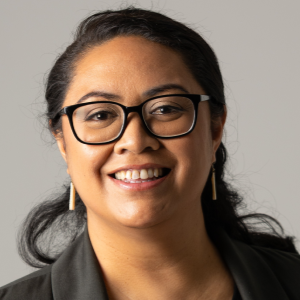
Loriza Ali’s eyes light up when she sees her son, who has cerebral palsy, smiling and doing his best to say hello to his mum over a video call.
Those same eyes well up near the end of the call, when she has to say goodbye. She moves quickly to end the call before her son spots her tears.
“Mama misses you. Bye, baby.
“He’s such a cheerful child. He has taught me that - to be happy in any situation.”
It has been more than 10 years since Ali first made a visa application in an attempt to move her son from Fiji - where her Fijian-Indian family is originally from - to her home in New Zealand.
Ali, in her 40s, has lived and worked here for about 11 years since moving to New Zealand for better opportunities to help financially support her son, Nathan Lyzal Amhas, 19, and her parents back home.
The applications she has made over the years have been declined every time.
“The main reason they are saying is [he has an] unacceptable standard of health,” she told the Herald.

“That’s not Nathan’s fault - it’s not his fault he was born disabled.”
Nathan has spastic quadriplegic cerebral palsy and can’t walk. He has generalised developmental delay and, as his mum describes it, has the intellectual development of a 3-year-old.
Ali’s mother, now in her 60s, is Nathan’s sole caregiver in Fiji. He used to be cared for by both Ali’s parents but her father died while on holiday in New Zealand in 2022.
Nathan’s father has had no contact with Nathan since he was diagnosed with cerebral palsy as a baby, Ali said.
He doesn’t require ongoing medical attention or medication - he simply needs care, she said.
Ali says she can’t understand why authorities don’t accept her son has a disability that can’t be changed or improved.

“Each time we’ve applied, they’ve said to give an updated medical report. But if you take him to the doctor, do you think any difference will be made?
“Nathan is born like that - he will always be like that. He is disabled.
“He has cerebral palsy - there’s nothing more we can do about it. There’s no treatment I can do overnight or in a month or a year ... to treat him.”
Immigration NZ’s Acceptable Standard of Health requirement means that those applying for a visa to work or study in New Zealand must show that they have an acceptable standard of health.
The requirement considers health criteria that include whether an applicant is at risk to public health or is going to add significant cost to, or demands on, New Zealand’s health services.
The ASH policy has drawn controversy from the likes of Migrants Against Acceptable Standards of Health Aotearoa, whose campaigner Aine Kelly-Costello says it is morally reprehensible that migrants with disabilities and health conditions - including disabled children - are measured by their economic value and considered a burden on the state.

In a similar case that came to light in September, an Indian woman living in New Zealand called on Immigration NZ to allow her teenage son, who has Down Syndrome into the country to live with her.
The teenager was later granted NZ residency after an appeal to Associate Immigration Minister Chris Penk.
Ali is now appealing to Penk for the same mercy for her son, after yet another visa application was denied in September.
Ali has two jobs, including as a collections officer, that allow her the flexibility to work from home. She is also a qualified teacher.
Ali and her new husband told the Herald they have a good combined income and recently purchased a new home in South Auckland.
They are more than capable of caring for Nathan, Ali said, and have strong family support in Auckland.

“If Immigration gives him a visa, he will not be a burden on anyone. I have got four sisters here and a brother here. They have got kids here and they are really supportive.
“Make it possible. Make me get my bubba here. He’s my only child.”
Ali also worries that her mother is getting older and, as a result, can no longer drive and is losing the strength required to take care of her grandson every day.
In a statement to the Herald, Associate Minister of Immigration Chris Penk said he has received a request for ministerial intervention on behalf of Loriza Ali in support of her son.
“My office accepted the request for consideration on 15 October and the case is now being prepared for review.
“Due to the volume of ministerial intervention requests, it can take up to six months for a decision to be made.”
Vaimoana Mase is the Pasifika editor for the Herald’s Talanoa section, sharing stories from the Pacific community. She won junior reporter of the year at the then Qantas Media Awards in 2010 and won the best opinion writing award at the 2023 Voyager Media Awards.