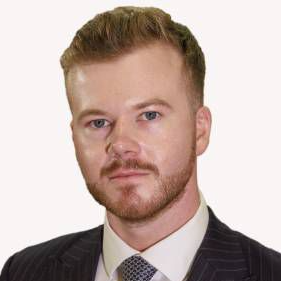
Chris Hipkins, leader of the Labour Party, has questioned the figures. Photo / Sylvie Whinray
Chris Hipkins, leader of the Labour Party, has questioned the figures. Photo / Sylvie Whinray
Labour leader Chris Hipkins has doubled down on his criticism that the Treasury engaged in guesswork in calculating the savings produced as a result of the Government’s controversial pay equity changes.
Last week, he said the pay equity figures appeared to be “made up” - a charge that ledto an accusation by Act that he was in “fiscal denialism” - and today he told the Herald the Treasurywas “putting a figure in the air and trying to find a number”.
The Treasury is holding firm, telling the Herald it stood by the $12.8b savings figure (over four years) which first appeared in last year’s Budget.
It added that it also stood by “the professional judgement from which it is derived”.
The opposition party has said it would reverse the Government’s changes but has not revealed how much funding it would set aside for it.
As the Herald reported on Budget night last year, Hipkins has refused to make that commitment as Labour is unsure how the $12.8b figure was reached. Hipkins has also raised the possibility that collective bargaining in the meantime may impact the amount required to be put back into the regime.
It also previously removed an assumption that the Government would fund potential settlements in the funded sector, which are private organisations funded to provide Government services.
Last May’s Budget said the Government’s actions meant “the estimated cost of pay equity settlements for the Crown has significantly reduced”. This created a “fiscal headroom of $12.8 billion over the forecast period”.
Finance Minister Nicola Willis said at the time these savings were redirected into health, education and other government services. About $1.8 billion was repurposed to capital investments.
As the Government expected some pay equity settlements would still be reached under the new regime, an undisclosed amount of money was retained in a contingency fund. The amount wasn’t revealed due to the sensitivity of negotiations.
The $12.8 billion figure was first revealed in last year's Budget. Photo / Mark Mitchell
Speaking last week, Hipkins is reported to have reiterated Labour’s commitment to reinstating the former pay equity regime but wouldn’t go as far as to put a cost on it.
“How much will that cost? We’re trying to work that through at the moment, because the Government aren’t releasing any information on how they reach the figure that they appear to have just made up,” he is reported by interest.co.nz as saying.
The Herald asked the Treasury about Hipkins’ comment that the figure appeared to be made up and whether it stood by it.
“Yes, Treasury stands by the $12.8b figure and the professional judgement from which it is derived,” a spokesperson responded, saying it reflected the “expected fiscal impacts over the forecast period” of the Government’s changes.
Hipkins doubled down today when asked if he stood by his criticism.
“They haven’t released any calculations that demonstrate that that number relates to a calculation of each of the individual claims that they basically unilaterally cancelled,” he said.
He said, “It’s just the Treasury putting a figure in the air and trying to find a number to put on the paper.
“It’s not based on a claim-by-claim assessment of what settling those claims might cost.”
Hipkins was comfortable questioning the Treasury over the matter, saying, “I’d do it if I was in Government as well.”
Chris Hipkins has doubled down on his questioning of the Treasury. Photo / Mark Mitchell
Willis said Labour’s approach was “pathetic”.
“Labour’s attempt to dissemble and say that the number created by Treasury, that existed in Treasury forecasts is wrong, I think shows that actually they’re trying to distract you and New Zealanders.”
She said Labour was trying to hide that “they have promised to restore a policy that they have no idea how to fund”.
“What Labour are actually saying is that they no longer trust Treasury’s professional judgement and their ability to forecast the costs of policies.
“That is a very serious claim to be making and I’d suggest not one that a party of frankly fiscal incompetence should be making.”
Willis said she questioned the Treasury’s judgement when she saw the figures.
“They were very, very clear that that was their forecast implication. There is independence in those forecasts.”
The Act Party’s David Seymour said it was “fiscal denialism bordering on conspiracy theory” from the Labour leader.
“If Hipkins doesn’t trust Treasury – the department governments of all stripes have relied on for costings for decades – who will he get to cook up an alternative figure?” asked Seymour.
“One way or another, the fiscal chickens will come home to roost. If Chris Hipkins genuinely believes Treasury’s numbers are wrong, he should do what real leaders do: publish his costings, show his assumptions, and tell New Zealanders what he will cut, tax, or borrow to pay for his promise.”
How does Treasury say it got to the $12.8b figure?
The Treasury explained that previously, as a result of decisions by the former Government, the cost of the pay equity settlements had been managed outside the usual annual Budget process, which involves ministers bidding for money from a fixed pool of money known as the operating allowance.
The usual Budget process forces the Finance Minister to make trade-offs between bids made by different ministers.
The Treasury would take into account the predicted cost of pay equity claims when doing its usual forecasts, such as the forecast total Crown expenditure, but wouldn’t disclose the exact amount “to protect the bargaining position of the Crown”.
“In April 2024, Cabinet agreed to the Pay Equity Reset which, among other changes, brought the fiscal management of pay equity partially into the budget allowance framework via two contingencies,” the spokesperson said.
One was to manage the cost of meeting the government’s own pay equity obligations – obligations to the people it employs in the public service. This is called the public sector pay equity contingency fund.
The second fund was to manage the government’s contribution to settlements in private organisations which deliver some government services. This is the funded sector pay equity contingency fund.
The Treasury has stood firm by the figure. Photo / Mark Mitchell
After the Government’s tightening of the pay equity regime last year, there was “an expectation of lower settlement costs”, the Treasury said.
As a result, $3.2 billion was returned from the public sector pay equity contingency fund. An undisclosed amount was retained for any future settlements.
On top of this, ministers decided to manage any future Government contribution to the funded sector from usual budget allowances, rather than having a separate contingency fund.
The Treasury said this led to $9.6b over the forecast period being returned from the funded sector contingency fund.
“This reflects the change in the fiscal management approach, not an estimate of the likely settlement costs or the Government’s commitment to contributing to claim outcomes.”
Adding the $3.2b returned from the first fund and the $9.6b from the second gets you to the $12.8b over the forecast period.
What does Labour say?
Labour says the amount in those contingency funds – was the figures underpinning the headline $12.8b in savings - are just estimates of the amount of money that may be needed.
“The $12.8 billion comes from contingency funds, basically money that’s set aside as a precaution. That amount is an estimate, Treasury’s best guess of what might be required,” said Labour finance spokeswoman Barbara Edmonds in a statement.
She said that was a different figure from what the actual pay equity settlements would cost.
“We’ve asked to see the detailed calculations behind Treasury’s estimates but much of that advice still hasn’t been made available.”
Jamie Ensor is the NZ Herald’s chief political reporter, based in the Press Gallery at Parliament. He was previously a TV reporter and digital producer in the Newshub press gallery office. He was a finalist in 2025 for Political Journalist of the Year at the Voyager Media Awards.