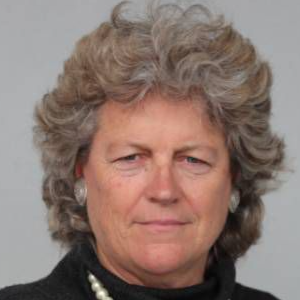
Group secretary for the $1 billion-plus Northland Corporate Group, Julian Smith, says the North's infrastructure has a key role in New Zealand's economy and should not be sidelined in the Government's latest infrastructure plans.
Group secretary for the $1 billion-plus Northland Corporate Group, Julian Smith, says the North's infrastructure has a key role in New Zealand's economy and should not be sidelined in the Government's latest infrastructure plans.
Te Tai Tokerau must not be taken off the table after the Government’s new national infrastructure plan, a Northland business leader is warning.
Group secretary for the Northland Corporate Group, Julian Smith, said the Government must continue to invest in the region despite significant belt-tightening signals from its major newinfrastructure plan.
“We understand the Government has really difficult challenges to prioritise spending decisions,” Smith said in the wake of the plan’s release this week.
“But Northland should definitely not be taken off the table.”
Northland Corporate Group represents six Northland corporate heavyweights with an annual turnover of more than $1 billion and employing 3500 people: Channel Infrastructure NZ, Culham Engineering, Marsden Maritime Holdings, McKay, Northpower and Top Energy.
Smith said the Government’s report painted a sobering picture of the need for prioritisation of what and where infrastructure money was spent.
But within that, Northland must remain at the top of the list when it came to future Government infrastructure spending decisions, Smith said.
“We would argue that the Government has underinvested in Northland for a very long time.
“Northland could make a much greater contribution to New Zealand’s economy if its infrastructure inequity was addressed.”
Northland Corporate Group has produced New Zealand Institute of Economic Research (NZIER)-backed reports showing the national economy will be significantly boosted by Government infrastructure investment into the region, building on Northland’s long-established role of servicing Auckland.
Smith said confirming and completing the State Highway 1 expressway between Auckland and Northland alone would bring a $1.2b boost for the economy.
He said the Government must continue to invest in this with rail and energy infrastructure.
Infrastructure Minister Chris Bishop at Paihia in the Bay of Islands this month. Photo / NZME
Bishop said Northland was not being left off the table.
“The national infrastructure plan shows that Northland has $31b worth of projects in the national infrastructure pipeline, including significant investments such as the Northland expressway and the Whangārei Hospital redevelopment.
“This is the second-highest total of any region shown on the map in the national infrastructure plan.
“Northland, like the rest of the country, needs sustained infrastructure investment.”
NZTA had 17 projects on the go across the North, he said.
This included the Northland expressway – one of the largest infrastructure projects in New Zealand’s history.
Eleven other Northland infrastructure projects had also been listed and were eligible to apply for fast-track approval.
“Northland is not being left out,” he said. Bishop said Government investment into the region through the national land transport fund had increased substantially over successive years – reaching a record $991.1 million from 2024 to 2027, an increase of more than 30% on the $751m investment from 2021 to 2024.
“This funding is focused on improving resilience, safety and key roading infrastructure,” Bishop said.
“This roading investment alone demonstrates that Northland is being prioritised and is not being left behind.”
There are $31 billion worth of projects in the national infrastructure pipeline, including significant investments such as the Whangārei Hospital redevelopment.
Smith said Northland already played a critical role in Auckland’s economy.
Auckland International Airport would not be able to operate without the aircraft fuel supply from Marsden Point, he said.
Its construction sector relied on Northland-produced concrete and structural steel, while the North was an important food basket for Auckland, he said.
However, producers had to pay for extra packaging to protect food they had made from damage as a result of the poor condition of roads.
Smith said there was $38b of latent capital waiting to be invested in Northland once there was confidence in the SH1 transport route.
“The sooner the Government could give Northland and Auckland confidence and confirm the expressway will be funded, the sooner that can be unlocked.”
Bishop said the Government understood Northland’s importance in relation to wider New Zealand and was investing significantly into the region.
He said it was very clear the Government was committed to the Northland expressway.
“I’ve also been clear for some months now that there is important sequencing and prioritisation work underway on the roads of national significance programme, and I’ll have more to say about that soon,” Bishop said.
Northland Mayoral Forum chairman and Far North Mayor Moko Tepania backed the recommendations of the Government’s new infrastructure plan.
The Local Government New Zealand Northland board member said the plan was important for both Northland and New Zealand to get ahead.
Meanwhile, Whangārei Mayor Ken Couper said the district would be working to make sure its infrastructure needs were still front and centre after the new Government plan.
“We have enormous potential in Northland,” Couper said.
Government infrastructure funding applications would need to be supported by a good case, he said.
“We will be fighting very hard.”
Couper said the council was working on its 2025 Future Development Strategy, which directed planning, managing and optimisation of the district’s growth opportunities over the next 30 years.
An implementation plan for this included looking at infrastructure needs.
Couper said the Government was signalling there were challenges in developing the level and scale of infrastructure people might find desirable.
“We need to look deeper to get a better understanding of Minister Bishop’s high-level comments about the new plan.”
■ LDR is local body journalism co-funded by RNZ and NZ On Air.