The next Global Dairy Trade Auction could bring some hope for better prices.
The next Global Dairy Trade Auction could bring some hope for better prices.
OPINION
With all the models, projections, algorithms and forecasts flying around, it’s no wonder farmers are confused but it pays to stay positive, Dr Jacqueline Rowarth writes.
What faith should the public put in models, projections, algorithms and forecasts?
The ability of “feeds” to send recipes, pictures of the royalsand puzzles for hidden objects, just because one once “clicked” is considerably greater than the ability to indicate the weather or the milk price – despite the millions spent on trying to foresee the trend.
There is another week before the next Global Dairy Trade Auction (September 5) which could bring some hope for better prices - depending on how much product is being put up for auction on the platform, and whether the pundits, using their models and algorithms, are right about future demand.
The OECD and FAO predict that more dairy products will be consumed over the medium term, as income and population increase, translating to 1.5 per cent growth pa.
By 2032, New Zealand will still be the primary source of butter and whole milk powder (WMP) on the international market, and its market shares are projected to be around 40 per cent and 60 per cent, respectively.
In support, Fonterra’s CEO Miles Hurrell has already indicated that demand for milk is picking up.
At the same time as demand is increasing, sustainability policies in some countries and regions in the northern hemisphere mean that supplies are being constrained.
Add in the logical suggestion that what the world needs is sustainably produced food that meets human nutritional needs, and New Zealand dairy and meat should be at the forefront of demand.
Hope for farmers lies in the future.
But there is more support now for farmer activities than they realise. We need the positives of the support in order to overcome the negatives.
He stated “This represents significant growth of more than $4.3 billion (8 per cent) on the previous year to 30 June 2022″.
The economy is benefitting from $1.2 billion more than was originally forecast, which is just as well given the escalating Government debt.
But it isn’t just the economic contribution that is important and good news, society is also recognising the environmental contribution that farmers make.
A ResearchFirst survey in July revealed that 68 per cent of people think farming is managing environmental impacts well or adequately.
That leaves 32 per cent (down from 36 per cent a year ago) thinking management is poor.
In comparison, 44 per cent of people think that the environmental impact of urban development is poorly managed, and 47 per cent of people think poorly of industrial activities.
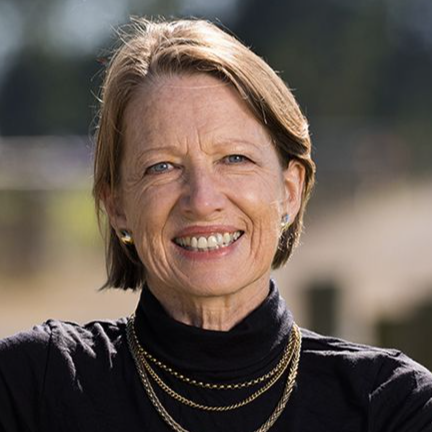
Dr Jacqueline Rowarth.
Overall, people are feeling increasingly positive about the agricultural sector.
In June ResearchFirst reported that farmers and growers had the highest proportion of responders trending to the positive.
“Within this, the sheep and beef and dairy sub-sectors both saw significant positive changes to the proportion identifying increased positive perceptions and no significant changes to negative perceptions”, the researchers stated.
Most of the negative comments in the survey appeared to be about prices and the cost of food, not the farmers and growers themselves.
Some of this information is filtering through to Wellington decision-makers.
The mid-August announcement that GST would be removed from fresh fruit and vegetables from next year is part of acknowledging that “cost of living” weighs more than twice as heavily on people’s thinking as climate change (65 per cent in comparison with 27 per cent).
He also gave the “commitment to set the price at the lowest level possible to meet the reduction goals”.
Given that the primary sector is already on track to meet the goal of a 10 per cent reduction by 2030, this should provide reassurance.
Efficiencies have played a part in the reduction, but so have afforestation, urbanisation, and expansion of kiwifruit, avocados and lifestyle blocks.
Kiwifruit and avocados, delicious as they are, were not mentioned in the OECD report. Dairy and meat were.
Global consumption of sheep meat and beef is projected to increase by 15 per cent, and 10 per cent respectively by 2032.
Projections and surveys provide a lot of good news for farmers and growers.
As the days lengthen, the forecast is for more sun and warmth. Outlooks are likely to improve and hope will return.
Mental fortitude will reappear by focusing on the positive, not clicking on the negative, and never, never, asking the internet about unicorns.
Clicking the latest political poll, however, might prove interesting in the run-up to the election. And if any of the parties feel that some help would be of assistance in promises, Federated Farmers of NZ has some ideas to assist.
Dr Jacqueline Rowarth, Adjunct Professor Lincoln University, is a member of the Scientific Council of the World Farmers’ Organisation and is a director of DairyNZ, Ravensdown, Deer Industry NZ and NZ Animal Evaluation Ltd. The thoughts and analysis presented here are her own jsrowarth@gmail.com.