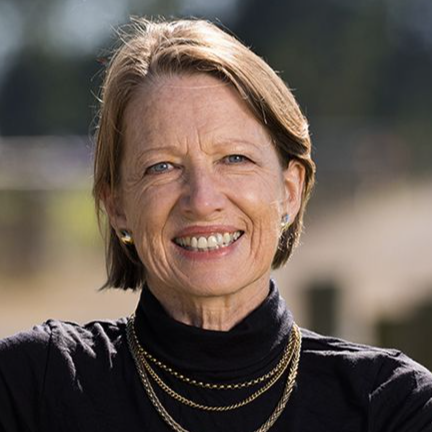
Parliamentary Commissioner for the Environment Simon Upton has warned that new resource laws need better baseline environment data.
Parliamentary Commissioner for the Environment Simon Upton has warned that new resource laws need better baseline environment data.
THE FACTS
The Parliamentary Commissioner for the Environment has highlighted the need to consolidate environmental data ahead of the new resource management system.
Concerns have been raised about the absence of reliable baseline data for environmental monitoring.
Public research organisations are undergoing continued staff redundancies.
Simon Upton, Parliamentary Commissioner for the Environment, has stated (again) that New Zealand’s environmental data needs to be consolidated and made public before the new resource management system is brought in.
Consolidation would allow gaps to be identified and an integrated approach for decisions with potential downstream consequencesto be included.
The current approach requires all the environmental information to be gathered before applying for the permit: decision-makers then sign off with a full understanding of what’s potentially or actually at stake.
It relies on good data, just as the new system does, but it is time-consuming and expensive at an individual level.
The new system is meant to be more “permissive” (enabling is also an appropriate description, avoiding potential misunderstandings), allowing for a greater number of permitted activities, with boxes to tick to ensure appropriate criteria are met.
The theory is that environmental indicators connected to these activities (such as stream quality and soil profiles) will be used to ensure the criteria around a permitted activity are still being met.
The new system, with its emphasis on monitoring to keep things in line, has been described positively by the Parliamentary Commissioner for the Environment, but he continues to ask whether we have all the information needed.
In particular, he is concerned that the lack of a reliable baseline means that any environmental data collected via monitoring wouldn’t have a reference to predevelopment conditions.
The question might then be asked about “predevelopment” being an appropriate baseline.
No people at all?
Pre-colonisation?
Or a change in technology?
Middens versus long drops versus septic tanks versus sewerage systems, for instance.
Foot-traffic versus horse and cart versus motorised transport?
Or, as Dr Jan Wright, the previous Parliamentary Commissioner for the Environment indicated, native deforestation.
While the appropriate benchmark is being considered, we should also factor in the workforce to do what is needed in terms of data and consolidation.
The news of yet more downsizing of employment within the public research organisations is not positive.
Beyond the immediate effects of fewer people to do what is needed are the signals sent to the education institutions about careers.
Signals from the Government about the importance of science and the existence of stable careers make the difference – they influence teachers and parents who influence the children.
Schoolchildren (like everybody) want to be valued for what they are and do.
The choices and options in careers are so much greater than in the past that assisting a choice is challenging.
Advice? Take the hardest thing you can, because most people don’t – and then you have options because people want what you have.
In his Norman Taylor Address (the premier award of the New Zealand Soil Science Society), Dr Steve Wakelin (BSI) highlighted the role of science.
“Science is literally the instruction manual for our world,” he stated, “and we need improved education in many areas to ensure that the population is at the forefront of understanding”.
The Government has shown that farm succession is important, and that good people farming the land give the foundation for New Zealand’s ongoing economic development.
Having good farmers and growers means that the systems research from the public research organisations (and levy bodies) will continue to be developed with the goal of feeding most people their nutritional needs for the least environmental impact.
Dr Jacqueline Rowarth, Adjunct Professor, Lincoln University, is a farmer-elected director of DairyNZ and Ravensdown. She is also a member of the Scientific Council of the World Farmers’ Organisation.
But for New Zealand, the question of whether “least environmental impact” is acceptable remains and won’t be answered with a diminishing scientific workforce.
Further complicating the discussion is that without a growing economy, scientific expertise and recruitment are unlikely to increase, and that could mean productivity in agriculture not keeping up with the rest of the world … and then the economy suffering.
Making a difference to this spiral means focusing on what gives New Zealand its competitive edge (in the Michael Porter “turn comparative into competitive” dictum).
New Zealand farmers and growers, in partnership with scientists and rural professionals, have been doing what is required for decades.
The next generation is on its way and needs encouragement in the direction that the country requires.
Benchmarking the environment requires careful assessment with a productive goal in mind in order to maintain the economy and environmental quality while sending the right signals to the next generation.
Dr Steve Wakelin and the Parliamentary Commissioner for the Environment have explained the way forward.
- Dr Jacqueline Rowarth, Adjunct Professor, Lincoln University, is a farmer-elected director of DairyNZ and Ravensdown. She is also a member of the Scientific Council of the World Farmers’ Organisation.