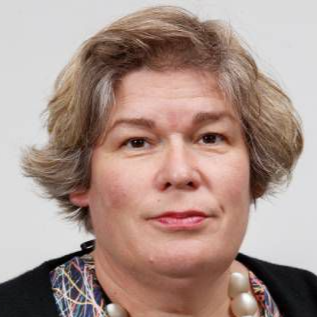
But the man’s lawyer, Lucie Scott, suggested to Judge Noel Sainsbury, who is presiding over the judge-alone trial, that the marriage was loving and supportive.
The defence questions the reliability of the woman’s account, specifically her recall of events and her tendency to embellish what she’s previously told police, or recall new details.
While giving her evidence, the woman is seated in the witness box behind a screen, with a communications assistant beside her and in the line of sight of a support worker from Rape Crisis.
The man, whose name is also suppressed, denies three charges of rape, two charges of threatening to kill, and one charge of assault on a person in a family relationship, which were laid as a result of his now ex-wife’s statements to the police.
In two video statements played in the Wellington District Court, the woman said her fear of her husband began the day after they got married, following their five-month whirlwind romance.
“He got angry because I had a headache and he was yelling at me, how I was ruining everything, and why did he marry me?” she said.
In the woman’s wedding speech, which was played to the court, on her wedding day she told the groom, “I adore you and want to spend the rest of my life with you”.
“Do you agree now you weren’t reluctant to marry [my client?]”, Scott asked.
“No, I remember being at the altar, going, what am I doing?
“I was in a vulnerable position, it just didn’t feel right, but you don’t call off a wedding easily. But the night before my wedding, I was putting a set of drawers together. I wasn’t doing my hair.”
Underpinning the charges are several incidents which the Crown says occurred over the final months of their marriage.
She described a discussion they’d had at the piano, which she was playing to relax after they’d discussed separation, when he’d approached and threatened her.
“If you try to leave, if you step out of line, I’m going to slit the [redacted] throats, and I will make you watch, and I will slit yours and bury you all,” she said he told her.
The threat, delivered in a whisper, had a “watch yourself” tone about it, she said.
“I knew I was in trouble.”
She said the comment left her petrified.
“Of all the things I’ve been through in my life, that was probably the most scared that I have ever been.”
Scott told the court the comment at the piano had followed a discussion about separating.
But Scott suggested those discussions never happened, something which the woman denied.
On another occasion, they were at the McDonald’s drive-through, ordering breakfast.
He’d ordered a tea and after it was handed to him, she said he’d reached over and poured it over her thighs, scalding her skin and leaving red marks.
As he’d grabbed the rest of the order, she patted herself dry.
“I said, ‘I’m fine, it was an accident’, but it wasn’t an accident, I saw him take the lid off, but he had to reach over and pour it over my lap.”
Challenged by Scott about what had happened, the woman refused to accept that the burn was accidental.
Scott referred to a text message later that day, where the woman texted her husband and told him she had a burn mark on her leg.
“Do you accept it would be odd to text him about a burn mark if he’d done that to you on purpose?” Scott asked.
“I was hoping he was going to say sorry,” she responded.
“I suggest this is an incident that, over time, has turned into something more sinister,” Scott suggested.
“No,” the woman replied.
The man has also been charged in relation to another incident, when an ambulance was called to their house after the woman had taken an overdose.
After the ambulance had left, she says the defendant got angry with her, “because she’d brought her mental health issues into the house” and threatened to kill her.
But Scott put it to the witness that her client hadn’t threatened her, but was instead worried about her.
“No, he was frustrated,” she responded.
Yet, Scott said, the woman hadn’t mentioned the threat when police had called her the next day while she was at work.
Mental health problems
The Crown say the woman suffered from mental health problems, arising from other, unrelated events in her life, which the judge suppressed.
As a result of that trauma, prosecutor Danya Atiyeh said the woman had been diagnosed with post-traumatic stress disorder (PTSD) and suffered from periods of suicidal ideation, nightmares, and sleeplessness.
In the two years before the marriage ended, she’d taken an anti psychotic medication to stop her nightmares, as well as a sleeping pill.
But the woman said the defendant didn’t like her taking medications, even preventing her from taking the birth control pill during their marriage.
If she went to therapy, she said he’d make her stay in a hotel so she didn’t bring her moods back into the house.
But Scott suggested her client was supportive of his wife seeking help, including regular therapy sessions and keeping in contact while she was in respite care.
She said her client’s only concern was whether it was helping.
But the woman rejected that.
“I recall him not wanting me to continue because he didn’t want the vibe in the house. He doesn’t believe in therapy,“ she said.
‘I was scared for my life’
The woman says that as she began to talk about leaving the marriage and seeking counselling, her husband raped her on three occasions.
The first time he pinned her against a wardrobe in their bedroom.
Following the incident, she left the house and stayed at Women’s Refuge, only returning after her husband had left the family home.
But Scott put it to the woman that the rape wasn’t the result of her client getting angry, after seeing an email between his wife and a lawyer.
Instead, Scott suggested, the woman left the house in the middle of the night because her husband had called her out for being drunk and told her to go to bed.
The woman rejected that, saying the email triggered her husband’s anger and prompted him to lash out and rape her.
“This is a moment where I am going to the dairy in the middle of the night, because I was scared for my life.”
Scott also asked why the woman texted her husband the following day about logistics, if he’d raped her the night before.
The woman responded that she had to keep going and was simply trying to juggle the demands of life.
The court heard that weeks later, when her husband found himself without a place to stay, she let him back into the house on the condition that he slept upstairs.
The woman told the court that she had to take the medication at a certain time every night because it made her drowsy, and once she’d taken it, she was “gone for the night”.
But under cross-examination, the woman clarified that her medication was designed to get her to sleep, not to keep her asleep throughout the night.
She described how, having taken her medication, she recalls him climbing on to the bed.
She said he pulled her head around, grabbed her breasts and pulled her pyjama pants down before raping her.
“The next morning, I awoke to him on top of me again. I just let him do what he wanted to do, and afterwards he said ‘That‘s all you need is more sex’.”
Scott put it to the witness that her client only had sex with her when she was a coherent and mutual participant.
“Do you agree with that?” Scott asked.
“No,” the woman responded.
The trial is expected to continue until the end of the week.
Catherine Hutton is an Open Justice reporter, based in Wellington. She has worked as a journalist at the Waikato Times and RNZ. Most recently she was working as a media adviser at the Ministry of Justice.