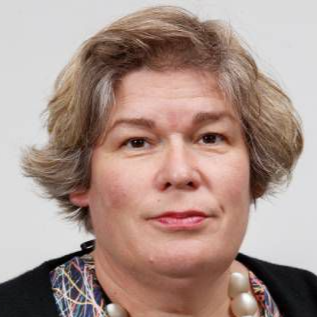
“That’s because remarkable decisions keep on being made, that should, in our submission, shake the conscience of us all, but also offend the court’s sense of justice.”
Dotcom wants the three-person panel to judicially review the High Court’s extradition decision last year and, in particular, two decisions relating to his extradition.
The first was made by the then-Justice Minister Paul Goldsmith in August 2024 to extradite him to the United States.
And the second is a decision by the then Police Commissioner Andrew Coster in July 2023 to refuse to charge Dotcom in New Zealand, a decision that Dotcom says didn’t follow prosecutorial guidelines.
In her decision released in September last year, Justice Christine Grice found that the minister’s decision to surrender Dotcom to the United States was correct and there was no evidence that the request was improper or politically motivated.
It also found the Commissioner of Police’s decision was correct, saying different circumstances applied to Dotcom from those that applied to his co-offenders.
It was that decision, to allow Dotcom’s co-accused Mathias Ortmann and Bram van der Kolk to be tried in New Zealand, in return for giving evidence against Dotcom, that Mansfield took issue with.
The pair were jailed in 2023 after being convicted of being part of a criminal group and causing loss by deception, for illegally reproducing and distributing copyrighted works. They were paroled after 13 months.
Essentially, Dotcom argues these decisions were unfair.
Mansfield says it was unfair that a deal was done, which allowed the pair to be dealt with in New Zealand, while his client faces extradition to the United States.
He also says it is unfair that his client also can’t be tried in New Zealand, that details of that deal have never been fully disclosed, and the principle of parity wasn’t applied.
“They should have been prosecuted together, tried together, and sentenced accordingly,” he said.
It was also unfair that the pair received sentences that had a starting point of 10 years, when Dotcom faced a “magnificent” sentencing range of between 30 and 150 years in a United States jail, with no prospect of parole.
“One hundred and fifty years is an effective life sentence, but so is 30 years,” he said.
Yet Mansfield submitted that if Dotcom was tried in New Zealand, he would likely receive a sentence with a starting point of between 12 and 15 years’ jail, for which he would be eligible after serving a third.
So he would effectively serve four to five years.
“How do we compare four to five years with 30 years and the more likely end of the range, 150 years, without parole?”
Mansfield told the court it was hard to see how that disparity could be justified.
And he added it was unfair that the minister approved extradition, on the grounds that Dotcom could apply for early release either under executive clemency or compassionate grounds.
These were either poor health, where someone was very close to death, or presidential clemency.
“I would not want to hang my jacket on the hope of executive clemency,” Mansfield told the court.
In response, lawyers for both the Minister of Justice and the Commissioner of Police told the court there was nothing wrong with the decisions that had been reached or the High Court’s decision.
Jack Hodder, KC, representing the Minister of Justice, referred to legal principles and extensive case law, saying the decision to extradite was made after “careful and thorough” consideration.
Fergus Sinclair, for the Commissioner of Police, said New Zealand had met its obligations under the extradition treaty.
He said the decision to prosecute Dotcom’s co-offenders in New Zealand was highly reasonable and consistent with international co-operation.
“To propose reversal of the settlement that was made through judicial review, it’s hard to see how that could be engineered without flouting matters of basic principle,” he said.
And he questioned whether the estimate of a sentence of between 30 and 150 years, which was made in 2023, was still correct, saying recent copyright sentences had been much lower.
Justices Christine French, Rebecca Edwards and Neil Campbell reserved their decision.
What’s the case about?
Kim Dotcom is wanted by United States authorities over his role leading the file-hosting site Megaupload, which was taken down at the time of his arrest in 2012.
The FBI alleged Megaupload operated as a criminal enterprise facilitating large-scale copyright infringement, leading to charges of racketeering, conspiracy to commit copyright infringement, conspiracy to commit money laundering, and criminal copyright infringement.
The charges carry potential penalties of decades in prison. Dotcom has consistently denied the allegations, arguing Megaupload was a legitimate service and that he is being unfairly targeted.
Dotcom was one of seven people sought in the 2012 FBI indictment, of whom he and three others were in New Zealand at the time.
One of those, Finn Batato, died, while the remaining two – Mathias Ortmann and Bram van der Kolk – pleaded guilty and served jail time in New Zealand.
Of those offshore, Andrus Nomm pleaded guilty and served a year and a day in the United States. Julius Bencko was arrested in the Czech Republic in 2023, while Sven Echternach, who was in Germany in 2012, has remained outside the reach of the US authorities.
Catherine Hutton is an Open Justice reporter, based in Wellington. She has worked as a journalist at the Waikato Times and RNZ. Most recently she was working as a media adviser at the Ministry of Justice.