Focus: Harvey and Jeannette Crewe were murdered at their Pukekawa farm in June 1970. Their killer remains unknown. Video / Simon Baker, Daniel Hines
The murder of Harvey and Jeannette Crewe rocked a nation – and the wrongful conviction of farmer Arthur Thomas continues to reverberate today. Pat Vesey was a driving force in overturning the convictions and securing a pardon for Thomas. David Fisher reports.
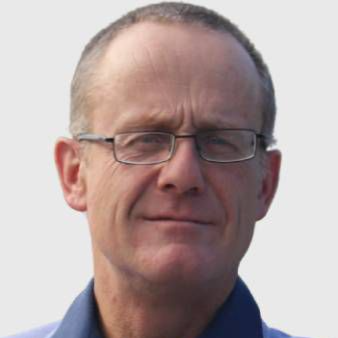
A pivotal figure in overturning Arthur Allan Thomas’wrongful convictions for the Crewe murders has died, with tributes offered to the role he played in setting right New Zealand’s most notorious miscarriage of justice.
Pat Vesey died yesterday, aged 97, having lived a life of which his daughter Lynne Watson said she was “incredibly proud”.
Vesey became one of Thomas’ most persistent advocates after his convictions in 1971 of the murders of Harvey and Jeannette Crewe at Pukekawa.
He was the uncle of Thomas’ wife Vivien Thomas but acted as a father figure when she moved to New Zealand from Australia. It was Vesey who introduced her to Thomas and then – after Thomas was convicted – founded the Arthur Thomas Retrial Committee, which campaigned on the convicted farmer’s behalf.
Thomas was again convicted in 1973 before being pardoned and released in 1979 after nine years in prison. Throughout, Vesey was a stalwart supporter leading the committee’s long campaign that kept the case alive, supported – Watson said – by his wife Joyce Vesey, who handled the administrative side of the campaign.
The Crewe murders remain unsolved. The case against Thomas was later discredited, most notably by a Royal Commission finding that crucial cartridge-case evidence had been planted by police – a conclusion subsequent reviews did not conclusively overturn.
Harvey (left) and Jeannette Crewe were shot dead in their Pukekawa farmhouse in 1970 then dumped in the Waikato River.
Watson, who was one of four of Pat and Joyce Vesey’s children, said: “He loved people and he hated injustice. If he knew something was wrong, he made sure he put it right.”
“I can only be so incredibly proud of what he and my mother did,” she said.
Watson told the Herald how her father’s involvement in the Thomas case played out during her “formative” teenage years and shaped her perspective of justice and trust in the police.
She said Vesey’s involvement in the case was contrary to the expectation at the time that the public would support the police and not push back against authority.
It had led to some in the community rejecting them, along with a persistent police presence that included the interception of phone calls from the family home in Mt Eden, she said.
“We had to say to people ‘be careful what you say to us’.”
Over the years, the case brought her into the periphery of those her father was working with to free Thomas, including his lawyer, Peter Williams, KC, author David Yallop, who wrote the 1978 work on the case, Beyond Reasonable Doubt, and actor Bruno Lawrence, who played Vesey in the movie of the book.
She also met with Lindy Chamberlain, the Australian mother accused of killing her 9-week-old daughter Azaria Chamberlain in 1980. Lindy Chamberlain’s case – like that of Thomas – became a symbol of the danger of flawed forensic evidence, public prejudice and institutional certainty.
Watson recalled asking Chamberlain about the impact of her conviction and being told that it had diminished her trust in police, which reflected her own experience of growing into adulthood surrounded by the campaign to free Thomas.
The parents of Azaria Chamberlain, Lindy Chamberlain (left) and Mark Chamberlain.
Her contact with Vivien Thomas – who left Thomas after he was pardoned – continued, including visiting her before her death in Queensland in 2011.
“She said the only thing she wanted from the New Zealand Government was for it to say she wasn’t the woman who fed the baby,” Watson said.
A police review of the case in 2014 concluded it was not proved that the Thomas rifle fired the fatal bullets and, even if it had, there was no direct evidence putting the rifle in Arthur Thomas’ hands at the time of the murders.
It also found no evidential basis for the allegation that Vivien Thomas had fed the Crewe’s 18-month-old baby Rochelle Crewe, and was not persuaded Rochelle received food or fluids after her parents’ deaths.
Des Thomas, Arthur Thomas’ brother, said Vesey’s impact on the case was “bloody huge”.
“He was pivotal in getting Arthur out. He’s the sort of person who should be knighted for the way he stood up against the corruption.
“He was one of the people out of the blue. He stood up and did all that for nothing. He was there at the right time. It was incredible.”
Associate Professor Dr James Hollings, a journalism academic who co-wrote The Crewe Murders with journalist Kirsty Johnston, spoke to Vesey for the 2023 book and described his role as “absolutely crucial”.
Hollings said Vesey felt “compelled to help” when Arthur and Vivien Thomas were “caught up” in the murder inquiry.
He said Vesey had a knack for publicity and wasn’t shy about approaching people with questions about the case.
Arthur Allan Thomas was cleared of the murders after serving nine years in prison. Photo / Martin Sykes
“He wasn’t afraid to knock on [former Prime Minister Sir Robert] Muldoon’s door. He planted a seed of doubt. And he went on and did that to a lot of other people.
“He had a real gift for cutting to the chase and fronting up to people. A lot of people would have walked away and said ‘it’s not my problem’. He never did.”
Vesey left school at 15 and worked a range of jobs from farm worker to retail, signwriting and running a small business before settling as a salesman.
He is survived by two of his and Joyce Vesey’s four children. They had eight grandchildren, 12 great-grandchildren and one great-great grandchild.
Vesey’s funeral will be held on Saturday at 3pm at Morrison Funeral Directors in Henderson, Auckland.
David Fisher is based in Northland and has worked as a journalist for more than 30 years, winning multiple journalism awards including being twice named Reporter of the Year and being selected as one of a small number of Wolfson Press Fellows to Wolfson College, Cambridge. He first joined the Herald in 2004.
Sign up to The Daily H, a free newsletter curated by our editors and delivered straight to your inbox every weekday.