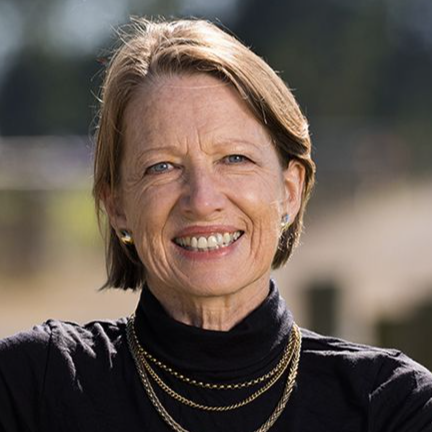
Research suggests a leader’s past expertise could matter more than charisma. Photo / John Borren
Research suggests a leader’s past expertise could matter more than charisma. Photo / John Borren
THE FACTS
Professor Andrew Oswald writes that for positive outcomes, leaders need expertise in their field.
Research on former Formula One drivers shows that leaders with technical experience achieve better results.
Eric J McNulty says successful leading requires constant learning and a balance of specialised and broad knowledge.
It is difficult to lead a project, a team, an organisation or a region and make decisions that result in a positive outcome, unless you have expertise in the matters at hand.
There is research on it.
With various co-authors, Professor Andrew Oswald of the University ofWarwickshire has shown that leaders matter.
In 2003, he wrote an article for The Independent stating that universities should be run by academics, not professional managers.
He explained that this is because universities are not normal businesses – they involve unusual people and special kinds of ideas.
Oswald says people who have not been university professors and lecturers do not understand what makes these “egotistical nomads” tick; academics care little for money but care a lot about rigour and intellectual beauty.
The same can be said of many scientists; science organisations are not normal either.
All three are large and complex organisations involving budgets, infrastructure and performance reviews, so it is understandable that selection committees might focus on candidates who have managed large budgets – but if they haven’t experienced the discipline, they won’t have the instinct required for leadership.
Oswald painted the picture: “When you are sailing into the Bermuda Triangle, it is better to have a cussing tattooed skipper with a lifetime of salt water in her rum-soaked veins than a reliable and charismatic captain who is a brilliant organiser, gorgeous figurehead and savvy harbour-party public speaker”.
He went on to point out that instinct cannot be acquired in a pill.
Over two decades later, and AI will not be the answer, either.
“Instinct bubbles through you and is cut into you by years of listening and seeing and making mistakes and biting your lip through triumphs and foolishness and black times and white times,” Oswald writes.
Further research followed, led by Amanda Goodall (Professor of Leadership at Bayes Business School (formerly Cass), City, University of London), resulting in a suite of papers presenting results from universities, hospitals, through basketball, to Formula One driving.
The basketball research, published in 2011, concluded not only that a leader’s expert knowledge plays an influential role in achievement, but also that a strong predictor of a leader’s success in year T is that person’s level of technical attainment in the underlying activity in approximately year T-20.
The studies on Formula One were published in 2015 and involved 60 years of data from Formula 1 competition.
F1 leaders were classified according to their level of inherent knowledge and industry experience.
The authors found that teams with leaders who had extensive knowledge of the core business performed better than others; people who started their careers as drivers and mechanics were more likely to be successful team leaders in F1 motor racing than people who were principally managers or engineers with degrees.
Dr Jacqueline Rowarth, Adjunct Professor, Lincoln University, is a farmer-elected director for Ravensdown and DairyNZ and a member of the Scientific Council of the World Farmers’ Organisation.
Experience in the underlying activity mattered.
Further, within the sub-sample of former drivers, those with the longest driving careers went on to be the most successful leaders.
What were you doing 20 years ago, and for how long did you do it?
This is a question that might be asked by panellists interviewing applicants for senior positions.
Or of candidates standing for elections for governance positions, whether for boards, local bodies or national roles.
It is a more specific question than “what interests you in this position?”.
It focuses on reality and lived experience.
What then of the goal of being a “leader”?
Eric J McNulty,associate director of the National Preparedness Leadership Initiative, says that successful leaders understand that their role is much more than the endgame of a specialist; leading requires constant learning and a balance of specialised and broad knowledge.
Listen to Jamie Mackay interview Dr Jacqueline Rowarth on The Country below:
Specialised is Oswald’s “expertise, experience and instinct”, but on top, McNulty suggests that an understanding of “current psychology, sociology, intra and inter-organisational dynamics, decision making, and more” is required.
Successful leaders are accomplished individuals who have led successfully because they moved beyond hyper-specialisation and were constantly pursuing new lines of inquiry to push and expand their thinking.
This research has application for your next selection panel.
Have the candidates held to a goal of expertise? Have they gained experience from outside the technical discipline that is appropriate for the goal?
Can somebody who enters regional or national politics with the “youngest ever” description know what it is like to be trying to run a business in a city, town or in the countryside?
The same could be asked of anybody in policy.
If the leader does not have expertise and experience, will the outcome of a decision be credible, or beset with unintended consequences?
Good intentions are not enough.
Dr Jacqueline Rowarth, Adjunct Professor, Lincoln University, is a farmer-elected director for Ravensdown and DairyNZ and a member of the Scientific Council of the World Farmers’ Organisation.